How to Eat Street Food Without Getting Sick
Street food is generally the choice when you’re travelling since…
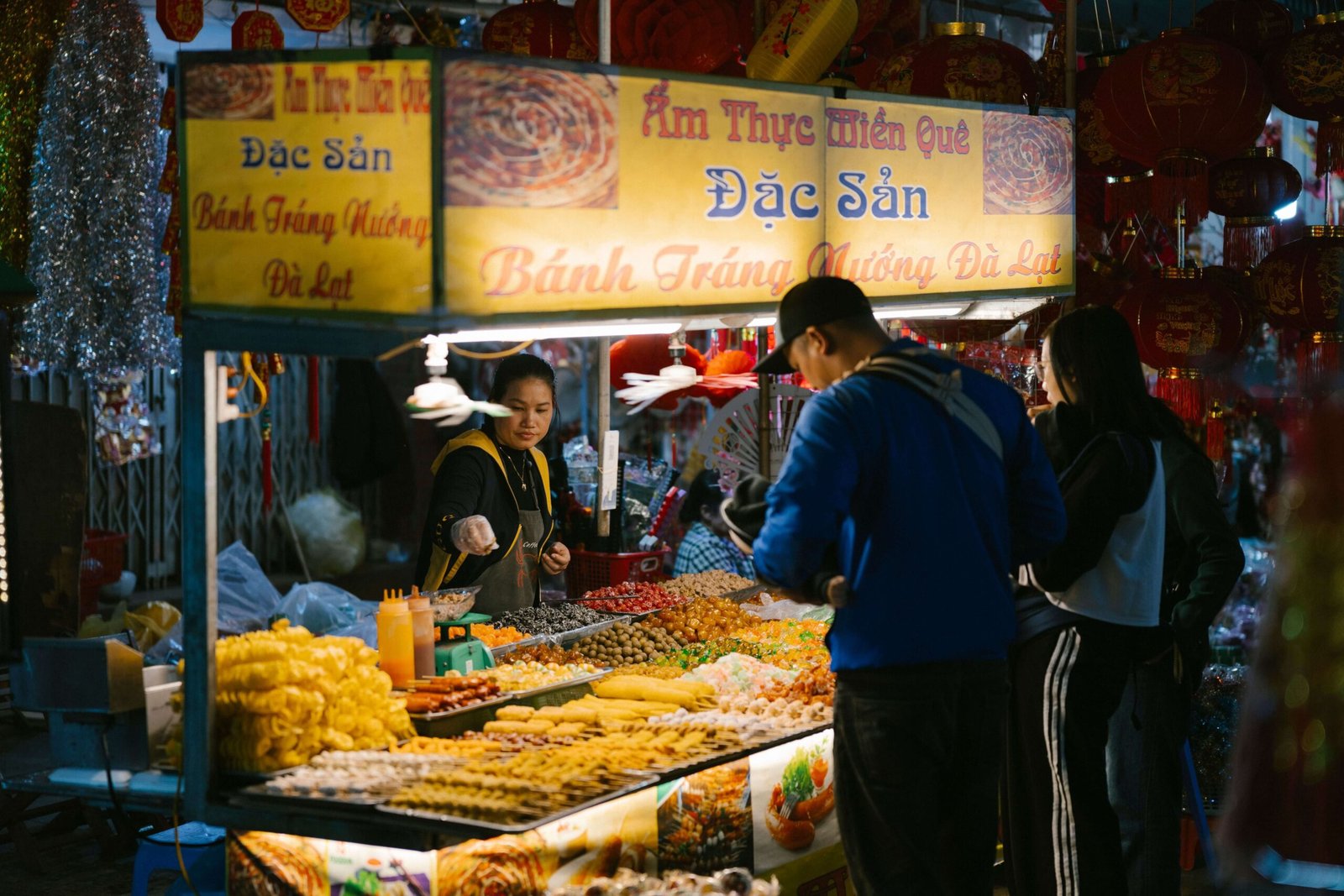
Street food is generally the choice when you’re travelling since it’s cheap, it’s quick, and the locals do eat it. Nevertheless, the view that street food tends to spoil holidays is only partly justified.
For what to order in Thailand, see our Thai food guide for solo travelers.
I have discovered that the stomach problems you suffer from are caused by a number of factors which can be avoided by eating street food, and the chance of falling ill is the same whether you eat in a restaurant or at a street vendor. Here are some suggestions regarding how you should eat if you want to boost your chances of remaining healthy. Once more, this is general travel advice and not medical advice, so it is important to consult the latest medical recommendations for your destination and to get advice from a doctor or a travel clinic before travelling if you have a medical condition.
Why people get sick in the place
A few things cause most trouble:
– **Food left out.** The most frequent reason is that street food has been left at room temperature for several hours.
– When one is adjusting to a new place, salads, sliced fruit and all other foods which have not been heated are particularly dangerous since they are eaten raw or are not properly cooked.
A person who is used to drinking tap water unfiltered might experience a feeling in their stomach, in particular when ice produced from that water is eaten.
– Cash can carry germs from one place to another through the use of shared utensils and by hand.
A stomach accustomed to certain foods will still feel uneasy when consuming clean food if the kind of bacteria in it is different from the kind you are used to.
How to pick a stall
One can achieve a great deal by taking just thirty seconds to look.
The fact that a queue is present at a street food stall shows that the food is served quickly and that it is a place where people who go there every day can rely on it; but if the stall is empty at lunchtime you should continue walking.
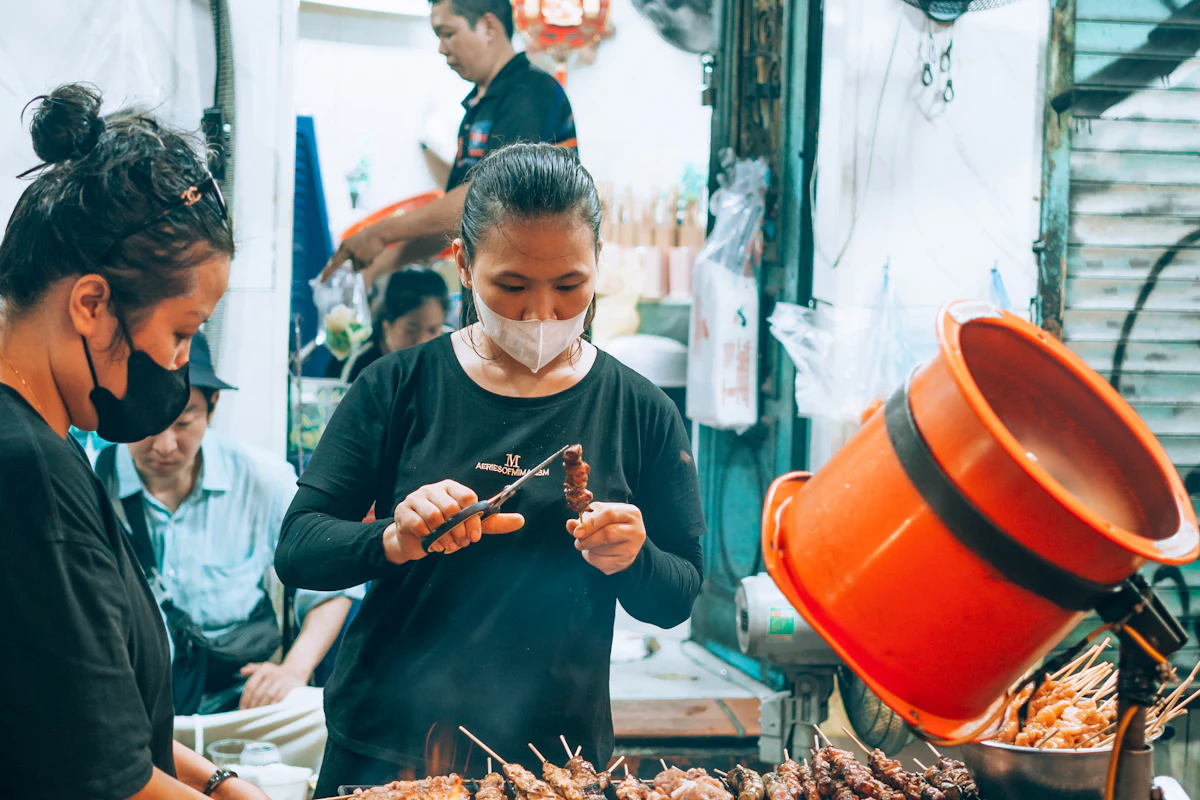
You ought to watch the street food as it’s being cooked since that which is prepared tableside over a flame is safer than street food which has been left in trays, and stir-fries and grilled skewers are suitable examples.
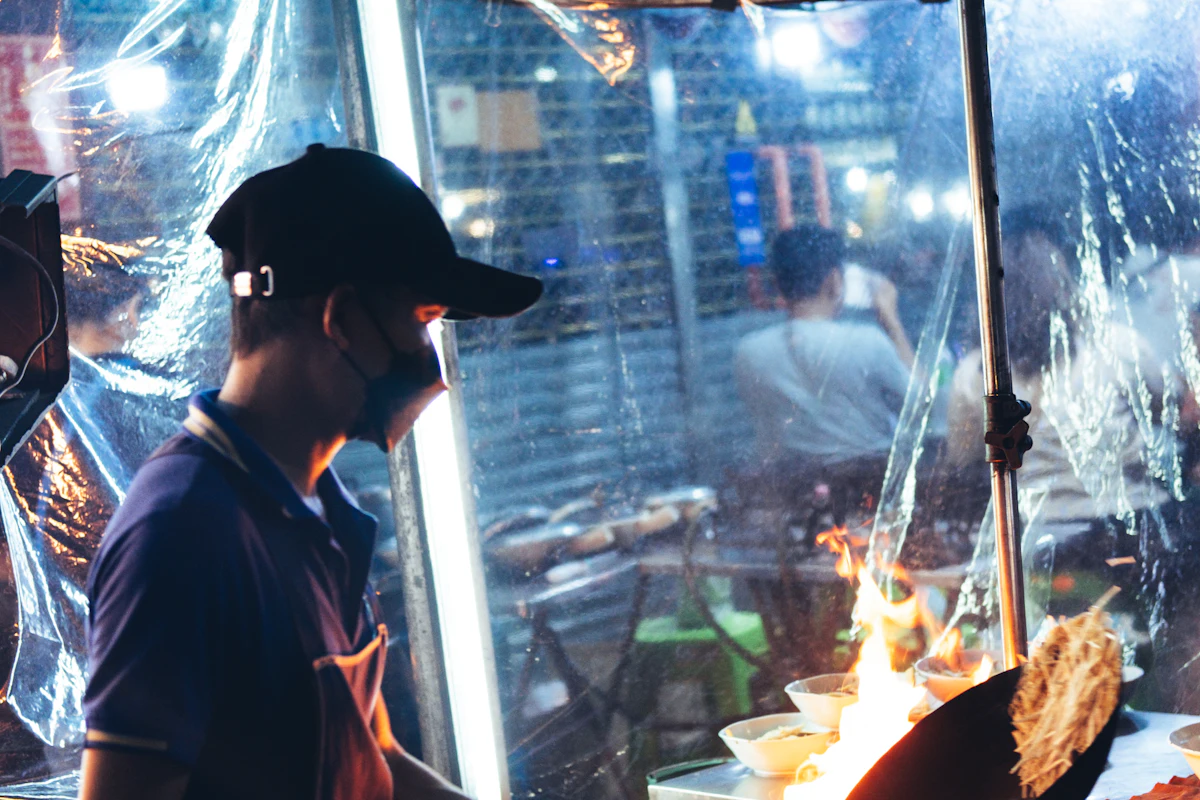
You ought to select street food that is not just hot but has also been cooked recently since steam is a good indication. Food that has been left to stay warm for a long time or food that is only lukewarm involves a higher risk.
Start by examining all the various aspects: does the cook use the same hands to handle both the street food and the money? Are the ingredients covered or do they remain over ice? Is the stall in a good state? Perfection does not have to be reached; it should be possible to determine whether the stall has been run in a careless way.
Consider your own judgement and instincts; if an item seems suspicious or is clearly worn out, don’t buy it since you can always choose another one at a different stall.
What to order and what to be careful with
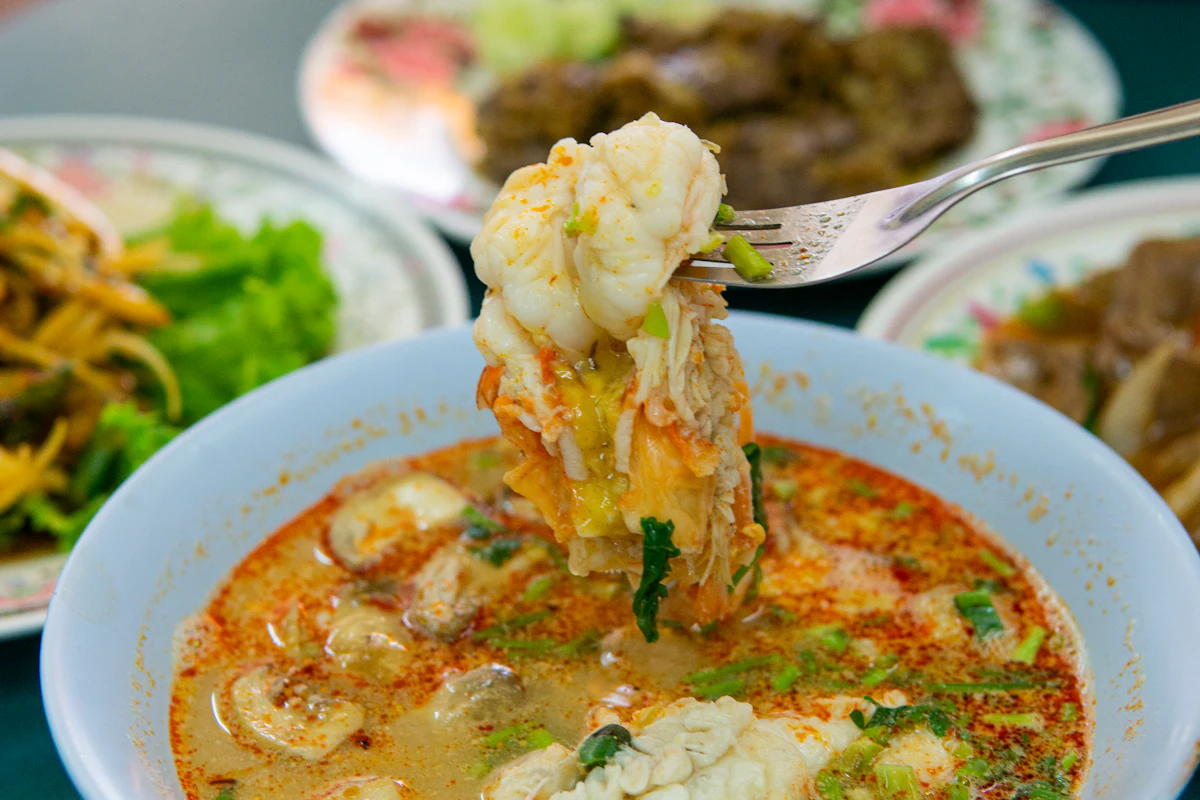
** lower risk:**
– Street food cooked to order and served piping hot
– Grilled meat and fish
– Noodle soups and broths
– Fried snacks served straight from the oil
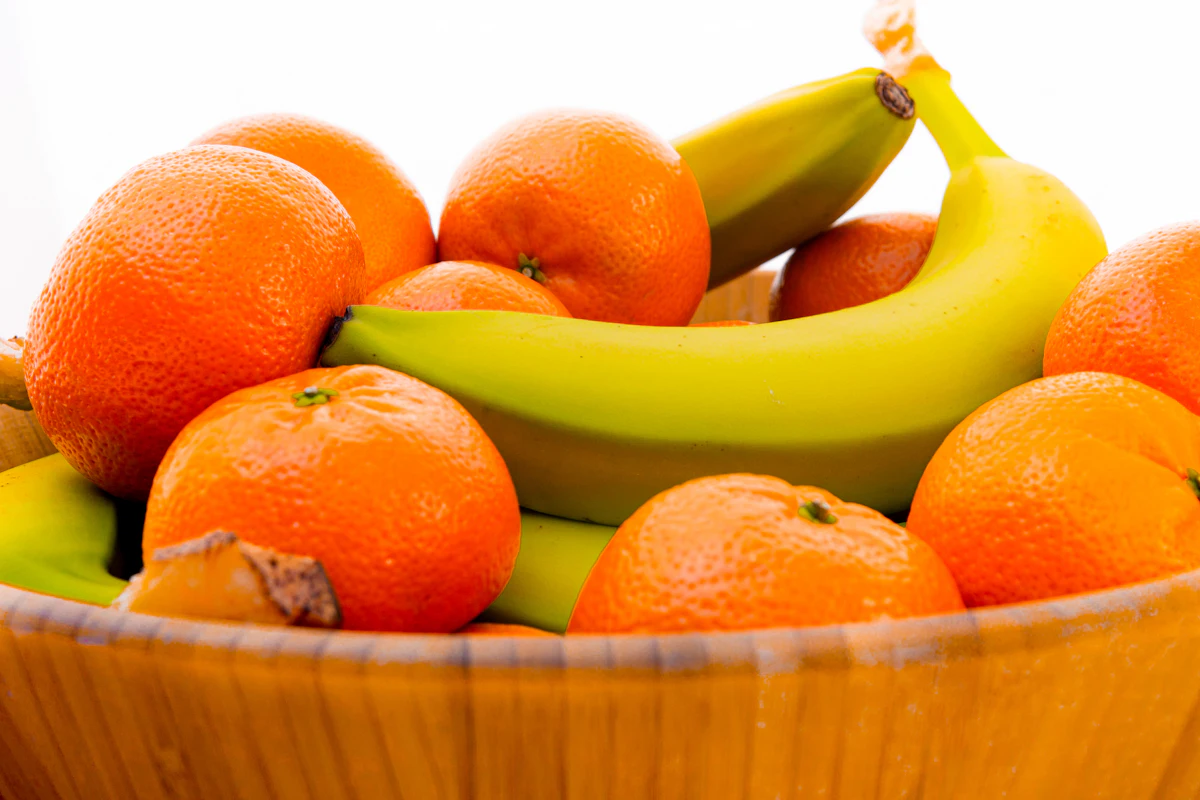
– Fruit you peel yourself like bananas oranges and mangoes
**Higher risk, especially in your first days:**
– Raw salads and unpeeled produce washed in local water
– Pre-cut fruit that has been sitting out
– Sauces and chutneys left in open containers in the heat
– Shellfish and seafood that aren’t clearly fresh and cooked through
– Dairy products and desserts that rely on refrigeration
– Anything lukewarm
You needn’t get rid of them altogether; rather, begin with the street food since it is risky during the first two or three days so that your stomach can get used to it and then gradually move on to the rest.
Water, ice and drinks
Make sure that you have access to either bottled or filtered water and verify that the seal on the bottle is still in place.
The quality of the ice depends on your location. In tourist areas the ice is produced in factories and is generally of a good quality. If you are in any doubt or if you are going to a place with an unreliable water supply, you should ask for the ice or leave it out.
You should be careful about drinking juices and smoothies if you don’t know where your water comes from, and it’s better if the juice or smoothie is made in front of you using fruit that you can see.
– If the tap water is not safe, then you should use filtered water to brush your teeth.
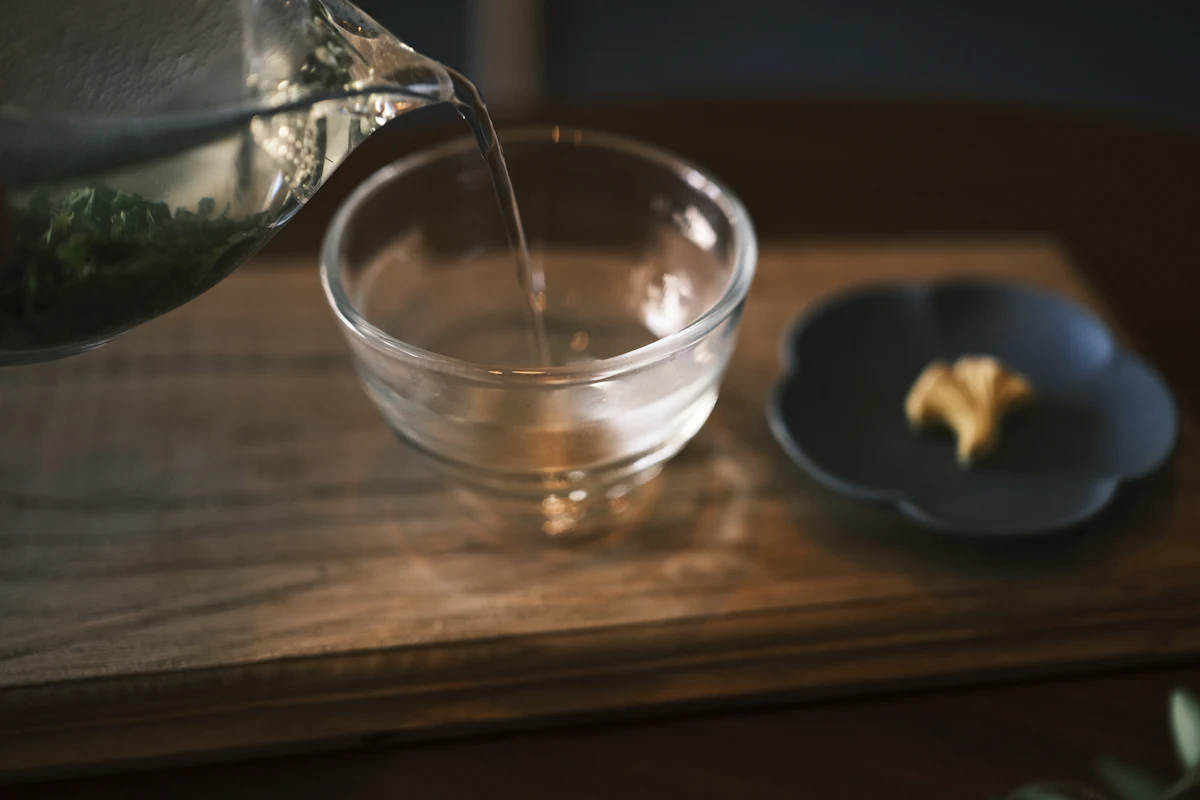
– Hot drinks are usually safe since the water has been boiled.
Habits that make a difference than you’d expect
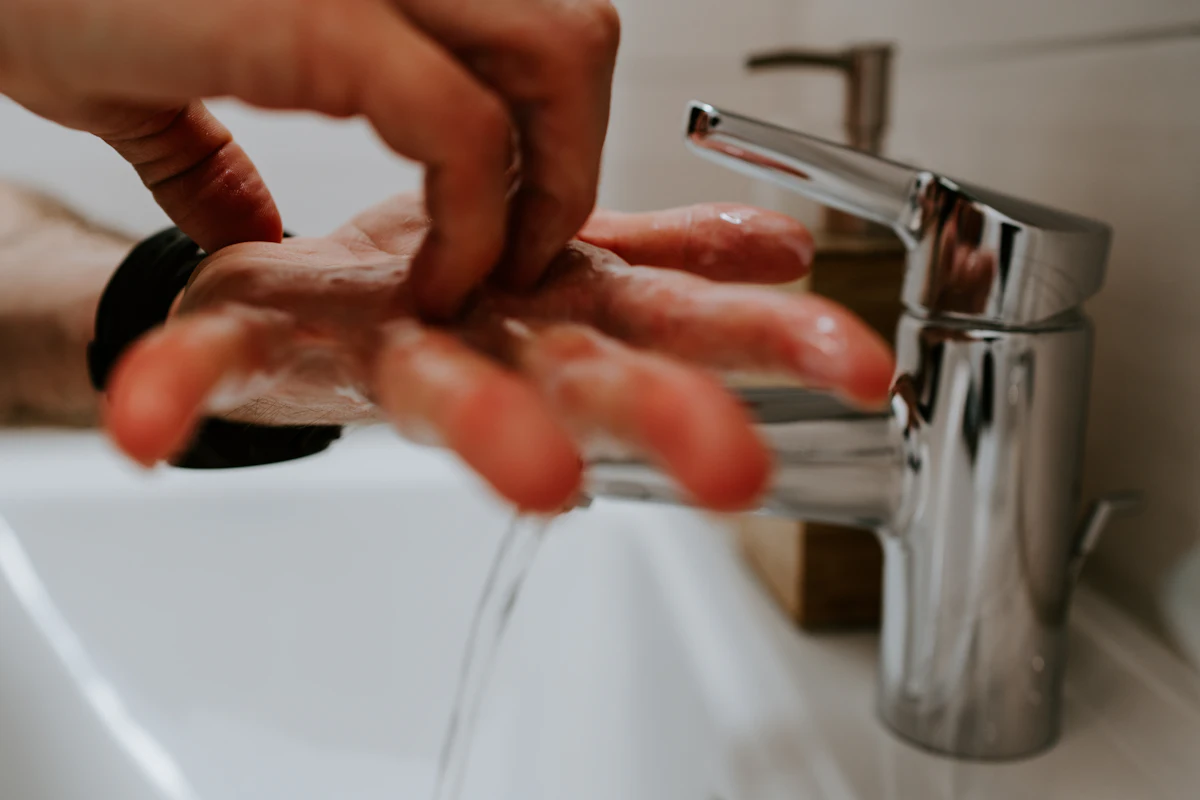
It’s important that you clean your hands before eating since the stalls generally don’t have a sink, so you should take some hand sanitizer or wet wipes with you. If possible, you should wash your hands with soap and water.
If you’re worried about sharing items, please bring your own cutlery or use cutlery that is disposable.
– Eat the food when it has just been served rather than waiting until it has cOn the first day you should not eat a large quantity, because even if the food is safe a heavy, spicy or oily meal taken after flying might make you feel unwell.el uRefresh yourself by incorporating some street food into your meals, particularly during the first few days. few– It is important that you stay hydrated since heat, travel, and a change in diet can all be harmful and dehydration will make these circumstances worse.re severe.
If you have allergies or dietary
People with allergies will find it more difficult to eat street food since it is hard to check the ingredients and cross-contact is likely to occur. In this case it is important to have a card in the relevant language stating your allergy and to take special care with sauces, pastes and all food that has been fried in the same oil. If you are not sure about a dish then you should leave it. leave it.
What to pack
A kit can save a bad day:
– Hand sanitizer or wipes
– Oral rehydration salts, which are available at most pharmacies and travel shops
– Any medication your doctor recommends for travelers stomach trouble
– Basic pain relief and a thermometer
– Your travel insurance details
Before you travel, it would be advisable for you to see your doctor or go to a travel clinic to find out what is suitable for you, in particular with regard to vaccines and medications.
If you do get sick
A similar thing may happen to experienced travellers and the condition is generally mild, lasting only one or two days.
Whenever possible, take a break and make certain that you drink a large amount of fluids; if you are feeling nauseous, then have small sips and use a rehydration solution to replace the fluids that you have lost.
Once you are ready, eat things like rice, bread or bananas.
– Do not drink alcohol until you have felt better again.
If your symptoms continue for over one day or if you have a high fever or if you see blood in your stool or if you are unable to take fluids, you should see either a doctor or a pharmacist.
– If you feel weak, dizzy, or confused or if you are seriously dehydrated, seek immediate assistance and give extra attention to children and older travellers.
Make sure you check what your travel insurance includes so that you’ll know your options before it’s too late.
Don’t let fear stop you
You rarely find out the real reason for travelling if all you do is have hotel breakfast and bottled water; although the risk in such cases is small the reward is some of the best food you’ll ever eat.
Choose a stall, eat the food while it is still hot, make sure your hands are clean and then wait a few days before going back for more.
Heading to Thailand? Start with our guide to the best places to visit in Thailand.