
How to Stay Safe as a Solo Traveler Without Being Paranoid
Most first-time solo travelers are more scared of the idea…
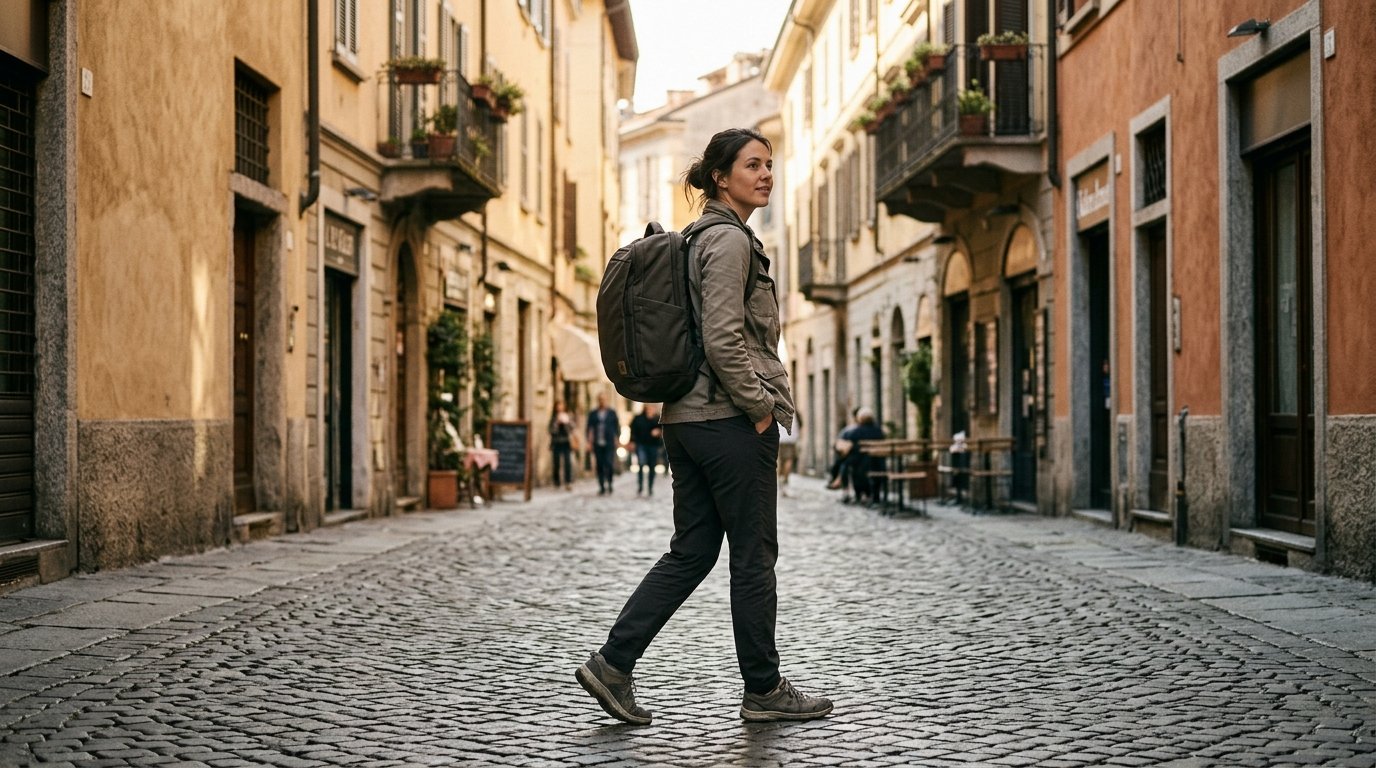
Most first-time solo travelers are more scared of the idea of danger than of anything that actually happens. I’d rather you spend that nervous energy on a few dull habits, because dull habits are what keep you safe.
Stop treating “unfamiliar” as “unsafe”
A loud market, a menu you can’t read, and a street that smells strange are all new. None of them is a threat. Fear makes everything look dangerous, including the friendly shopkeeper.
The things that actually go wrong are duller: landing late with no plan, a phone at 3%, a taxi where nobody mentioned the price. You can fix all of those before you leave home. That’s the whole strategy. Be nervous about the right things and relaxed about the rest.
Before you go
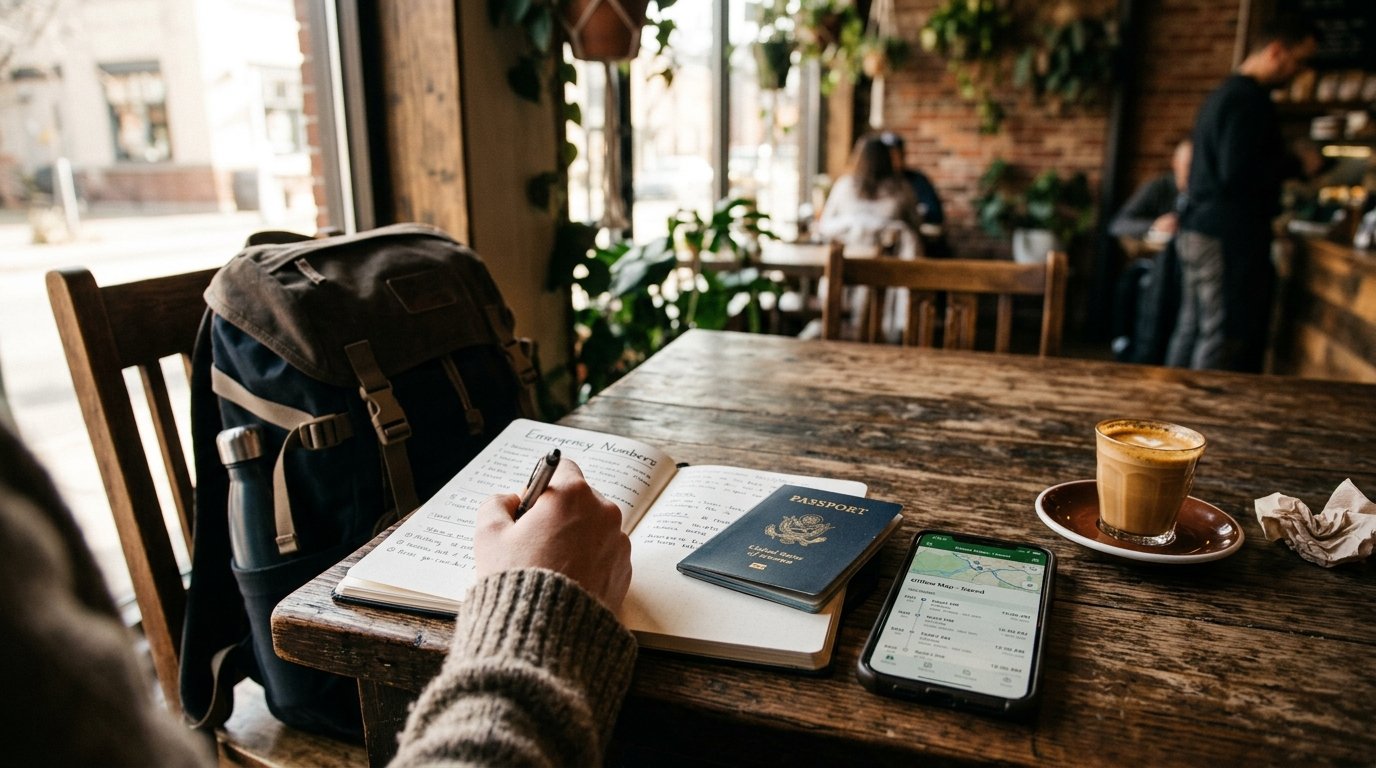
✦ Tell one person your plan. Flights, where you’re sleeping and what you’ll do each day. Agree on a check-in. Keep it light. A message every day or two is plenty. If you only do one thing on this list do this one. Someone knowing where you are makes every other risk smaller.
✦ Research the street not the city. A great city can still have one street for walking alone at night. Read reviews of your accommodation especially from other solo travelers and look at the walk from the nearest station to the door.
✦ Get insurance. Read what it covers. Medical care, theft, cancellations. Save the assistance number somewhere you can open without data.
✦ Photograph your documents. Passport, insurance, cards. Store the photos safe away from the originals. If a bag goes missing this turns a disaster into an errand.
✦ Look up the emergency number. It isn’t 911. Across the EU it’s 112 and other countries differ. Save it before you need it.
✦ Put everything in one note. Addresses, booking numbers, phone numbers. When your phone dies or an app won’t load you’ll be glad it’s all, in one place.
Arrival is where most trouble starts

You’re tired, you have no idea where you are, and you’re taking all the things that you own, so when you’d like to put off doing it you should be as organized as possible.
Before you go, plan the route from the airport or station to your house and find out the various options together with their estimated cost and travel time.
Go for a taxi that is licensed or use a ride-sharing service that you trust. Before the door closes, make certain that you have been charged the correct fare or that the meter is working. Don’t take up a ride from anyone who offers one to you in the terminal.
If you can avoid arriving late at night, go ahead and do so; but if that is not possible, then book your first night at a hotel which has a manned reception.
Take the address, the host’s phone number and the instructions. A Wi-Fi connection at the airport isn’t considered to be a plan.
The common mistake is possessing a dead phone and an address that is illegible. In order to handle all three scenarios, take a screenshot, use a power bank, and have the address written on paper (ideally in the local language).
Where you sleep does half the work
Consider the comments about the security, the lighting, and the street outside.
Ensure that the door locks correctly and that there is provided a place in which valuables can be kept.
It should be taken into account how far one has to walk from the public transport and the open restaurants, especially as you’ll be walking back after dark.
You should put your passport and any extra cash into the locker at the hostel and never leave items charging in the common area.
Should you have the feeling that a place is not suitable when you first get there, you ought to go away; it is cheaper to lose a night’s booking than it is to remain in a place you don’t trust.
Money and phone
Split the journey by taking one card along with some cash, lock up the extra card and the additional cash in your room, and in that case if your wallet is lost you’ll only be annoyed rather than left in a difficult position.
Before you leave, download the maps offline and bring a small power bank with you.
It’s best not to use public Wi-Fi when carrying out bank transactions since wi-fi networks at cafés and airports are accessible to everyone; instead, use mobile data if you are handling anything sensitive.
Out and about

It seems as if you know your destination. Before you leave the café, not when you’re on the pavement, check your map. Almost all of that confidence comes from not looking lost.
When you are in a crowd keep your bag in front of you because pickpockets usually operate at stations, markets and tourist sites and in most places a bag with the zip fastened will be sufficient.
Keep an eye on your drinks. If you’re by yourself then no one else will be watching them. Make sure you know your limit and don’t leave a drink unattended.
Spend five minutes looking into scams. Before you go, search for “[city] tourist scams”. The scams are generally just a few standard tricks: for example, the kind-hearted stranger who leads you to a bar that’s overpriced, or the attraction which is “closed” on the day in question and actually open in the building next door.
You have no obligation to explain the fact that you’re alone, and ‘I’m meeting friends later’ is a perfectly reasonable answer.
Trust your gut, but know what it’s telling you
If it seems wrong to you, then go. You have no obligation to show a stranger politeness, to ask for an explanation, or to waste your time. Enter a shop and then cross the road to end the conversation.
The ability to distinguish between “dangerous” and “unfamiliar” lies in the fact that it is normal to feel uncomfortable when something is new, since such discomfort disappears over time; it is only when there is a specific reason for unease—for example, someone following you or a person who ignores your “no”—that you should take action.
Then you should ask yourself whether there is something particular that is wrong or if you’re just not knowledgeable enough about it; in the first case you should take action, and in the second you should usually take a deep breath.
Saying no
Individual travelers are invited to all sorts of things—to have a drink, to take part in a tour, to have a ride, or to come to someone’s house. A lot of this is real kindness, but some of it isn’t and there’s no way you’ll always be able to tell.
So set a few rules in advance:
First go out and meet some new people in a public place, and let someone know where you’re going.
It’s best not to go into a private car with a person you’ve just met.
If you agree to something, make sure you can get home on your own.
“No, thanks” is a complete reply and you are not obliged to give a reason.
Before you leave, check this
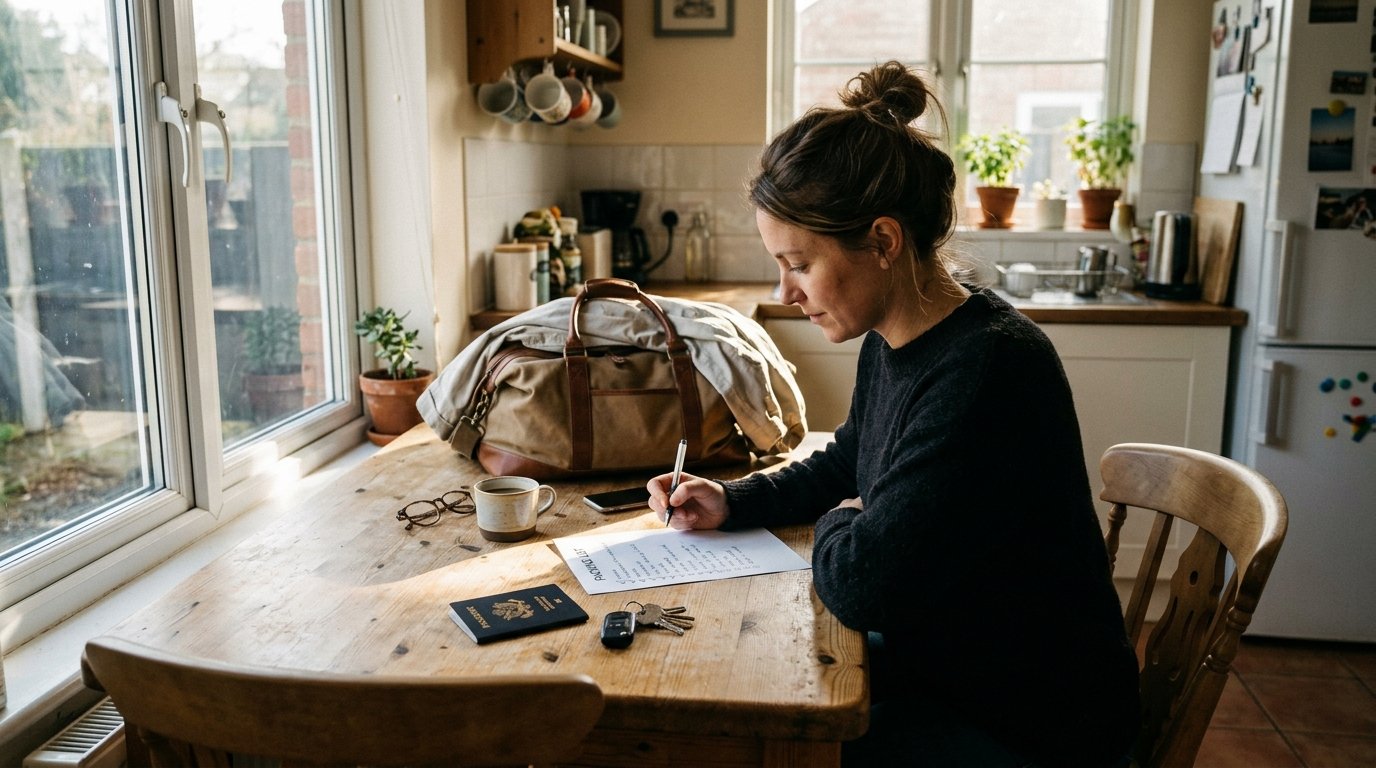
✦ Itinerary shared with someone you trust
✦ Insurance checked, assistance number saved
✦ Document photos stored separately
✦ Local emergency number saved
✦ First night booked and reviewed
✦ Route from arrival point to your bed planned
✦ Offline maps downloaded, key details in one note
✦ Power bank packed
✦ Backup card kept away from your main one
It’s impossible to eliminate all risks, and anyone asserting that they can is merely selling a product. You should deal with the ones that are predictable before you leave, thus allowing your focus to be on the reason that originally prompted your visit.