✈︎ Map Your Way


Don’t leave Bangkok with just a boring afternoon following your flight. Instead, in the morning visit Wat Pho and the river, take in the streets of Talat Noi, and then go to Chinatown for dinner. The various areas show off different sides of the city—its major landmarks, its regular neighbourhoods, and the parts where deciding what to eat turns into an activity.
It’s a good idea to plan your day according to the areas you’re visiting. A day that includes two nearby places of interest together with a long lunch is usually better than attempting to see five different attractions that are spread out all over Bangkok. With regard to accommodation, you should look at the walking distance to a station or pier rather than just going with a listing which says it is “central”.
If food, local culture, and browsing the city are things that matter to you, then go to Bangkok. If busy cities tend to exhaust you, stay for a shorter period and put some space between your activities.

Chiang Mai allows you to enjoy the city while also exploring the surrounding mountains. Highlights include Wat Chedi Luang, the shopping streets, the Nimman area, and trips to Doi Suthep or Doi Inthanon.
Don’t fill every day with excursions. Leave time for a slow meal, a café, or a walk through the neighbourhoods. Stay in the Old City if temples are your priority, or choose Nimman if cafés and restaurants matter more.
Before planning a mountain trip, check the actual driving time and current air quality, especially if you’ll spend a lot of time outdoors.
If one is interested in unusual architecture and art then Chiang Rai ought to be considered, the principal attractions being the Wat Rong Khun (White Temple), the Wat Rong Suea Ten (Blue Temple) and the Baan Dam Museum.
Rather than staying only one night in Chiang Mai as a mere detour, why not extend your stay to two nights? In that case you’ll have greater flexibility and be able to properly explore without turning the journey into one long day of travelling.
If you are not short of time and have already visited all the cultural sites along your route, then you should just pass through Chiang Rai.

If you wish to experience Thailand’s history without having to make a major detour from Bangkok, then Ayutthaya is the better option since its ancient temples and monasteries turn it into an excellent historical stop.
Staying for just one night can in fact be more enjoyable than a day trip that is tightly scheduled, as it allows you to explore more slowly.
If you want to have a more immersive historical experience, then go to Sukhothai since the historic park allows you to explore the ancient temples and ruins at a slower pace.
You will find it much easier to visit the main sites if your accommodation is situated near the historical park. It must be mentioned, though, that the historic area and the modern town are separate, so make sure you check the location of your hotel.
One does not have to visit both Ayutthaya and Sukhothai on a first trip.
Choose the one that fits your route best and give yourself enough time to enjoy it.
Khao Yai is great for hiking, visiting waterfalls and birdwatching. The park has trails but in some cases a guide or permission from the visitor centre is required.
Don’t just focus on getting to the park entrance. Think about your route to the trailheads and to the things to see inside the park. Make sure to check the access rules before you go.
Wildlife is part of the experience. There is no promise that you will see any animals. Khao Yai should be chosen because you enjoy forests and outdoor activities not because you are hoping to see an animal.
When it comes to places to stay look at the Pak Chong area or the Mu Si area. Compare where your hotel is, with where your tour picks you up or where you plan to enter the park.
Pai is a town that’s different from the bigger cities in northern Thailand and is perfect for tourists who want to slow down and discover the countryside.
Of arriving in the afternoon to take a sunset photo and leaving the next morning spend a full night there. If being near restaurants and cafes is important to you stay in the center. A location, in the countryside provides peace and quiet. Think about how you will get before you make a reservation.
If you do not like mountain roads. If you want to keep your trip in northern Thailand short then do not choose Pai.
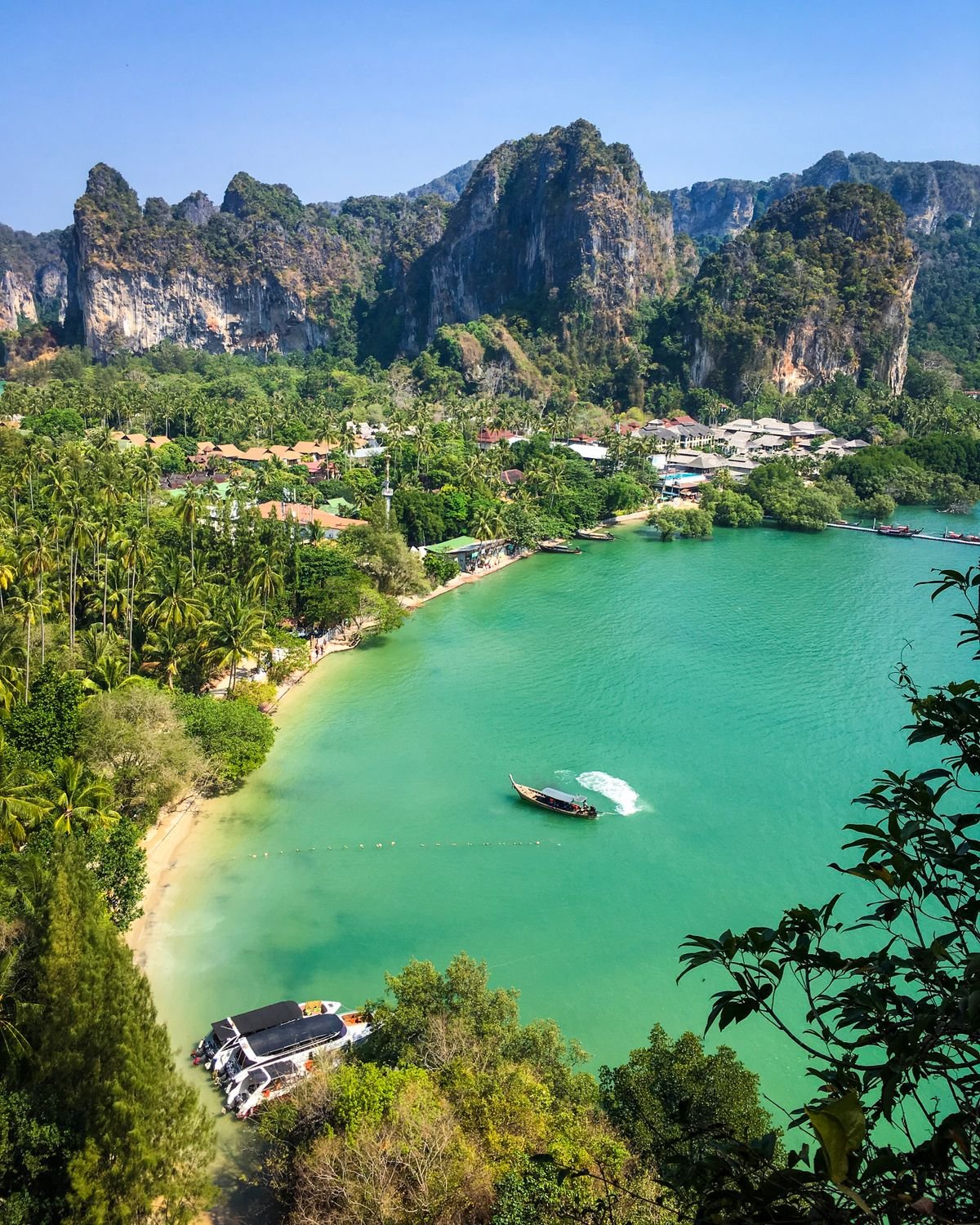
People who are looking for dramatic landscapes and beaches will choose Krabi; among Krabi’s main attractions are limestone cliffs, the scenery and boat trips.
Ao Nang offers a variety of places to stay, as well as numerous restaurants and tour options. If you want a more secluded experience then Railay is a good choice. The fact is that getting to Railay by boat means an extra stage for both arrival and departure.
Don’t spend your days going around on island trips. You should leave some room for possible changes in the weather and for the pleasure of being in the place you are staying.
Phuket has beaches, cultural spots and interesting buildings to see. Some of the popular beach areas are Patong, Kata, Karon, Kamala and Mai Khao.
Because the island has much to offer picking the right place to stay matters. Think about the neighborhood how close you are to the beach what kind of restaurants are around. The vibe at night. Don’t just look at the hotel’s facilities.
Phuket Old Town is not near the sea. It’s inland so it’s a choice if you care about food, culture and old architecture. But if being close to the beach is important, to you then pick a hotel that’s near the water.
If you want lots of options and things to do then Phuket is a choice.. If you’re looking for peace and quiet don’t give up on the island. Instead focus on picking the area that fits what you want.
Koh Samui is ideal for tourists who are looking for a variety of places to stay, restaurants, beaches, and activities.
Chaweng and Lamai have beach experiences while Taling Ngam gives a more tranquil atmosphere; Bophut has a certain character due to its older shophouses and the well-developed visitor facilities.
For convenience’s sake, select a place of accommodation near the restaurants. The beaches that you will be using most should be considered. Although a remote property might seem attractive. Be sure to include transport costs and the need for multiple trips when preparing your budget.
If comfort and the availability of a wide range of options nearby are more important to you, then go for Koh Samui rather than looking for the least developed island.
Koh Tao is especially attractive to tourists whose primary interest is diving, since it has a firmly established diving and training sector and is therefore a popular destination if one wishes to learn or enhance one’s skills.
If you are going to enroll on a diving course, you should get in touch with the operator before finalising your travel arrangements. You shouldn’t select the course solely on the basis of price—instead you must compare the quality of the instruction, the size of the groups, the certification offered and the contents of the course.
If diving is one of the main reasons for your trip to Thailand, then Koh Tao is the better option.
Even though Koh Phangan is famous for its Full Moon Party, the island has a lot to provide beyond night-time events; it also has more peaceful beaches and more laid-back communities for tourists who are looking for a slower way of living.
The beach you pick and the dates of your visit can have a big effect, so it’s advisable to look at the event dates, the nightlife in the area, and the most recent reviews of the accommodation before you book.
If you want a holiday that’s peaceful, you should take the time to look around and make sure that restaurants and all the other necessary facilities are accessible. On the other hand, if you prefer a more social kind of trip, choose a place where such an atmosphere is part of the experience.
If you prefer the idea of choosing a beach community that matches your own pace rather than expecting the entire island to have one uniform atmosphere, then go for Koh Phangan.

The best thing to do when you have an overfull itinerary in Thailand is to get rid of an unnecessary transfer.
If you have only a few days at the beach, then including a third island might not be worthwhile since packing, travelling to a pier, taking a boat journey and checking into another hotel will take up a lot of the time you had planned to spend on the beach.
Pai, Chiang Rai, and Sukhothai are all worth looking at, but it is not necessary to visit all three when taking a short route to the north.
It’s better to select the destination that best suits your interests and planned route than to attempt to include them all.
If you want to go to different restaurants each evening, then a remote resort is not suitable. Similarly, if your main concern is having uninterrupted sleep, a nightlife district makes no sense.
The rule is to select the places that you truly want to experience and then ensure that the travel between them is reasonable.
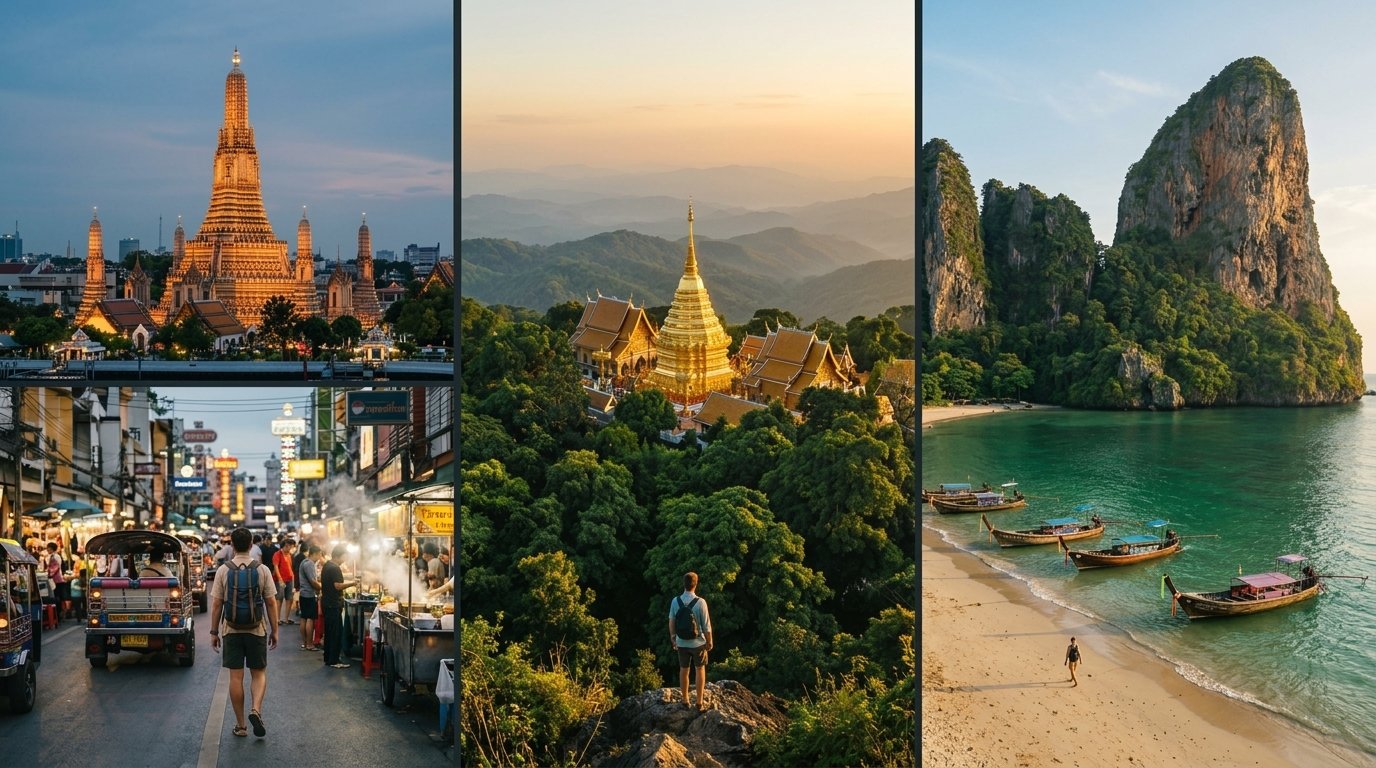
Putting Your Thailand Route Together
The days in Thailand shown here include local transfers. You should modify them in light of your arrival times, the current connections, and your departure airport.
For a day-by-day plan, see our one-week Thailand itinerary for solo travelers.
For a city-and-beach trip:
Days 1–3: Bangkok
Day 4: Transfer to Phuket or Krabi
Days 5–6: Enjoy your coastal base
Day 7: Depart, or allow time for your return connection
If you’re taking a trip with a focus on culture, then choose Chiang Mai instead of going to the beach. One week can be adequately covered by having two base locations.
One relaxed option is:
Days 1–3: Bangkok, with Ayutthaya as an optional day trip
Day 4: Transfer south
Days 5–8: Stay in one coastal base
Day 9: Return towards your departure airport if needed
Day 10: Depart
If the beaches aren’t your top priority, then use the second half of the trip for a visit to Chiang Mai and one other northern destination carefully selected.
For a first visit combining city, north, and coast:
Days 1–3: Bangkok
Day 4: Travel to Chiang Mai
Days 5–7: Chiang Mai and a selected excursion
Day 8: Travel to your coastal base
Days 9–12: Beach time and optional boat trips
Day 13: Position yourself for your international departure
Day 14: Depart
This will still require a number of travel days. It is important to check the actual connections before reserving accommodation, and do not add another destination to each gap.
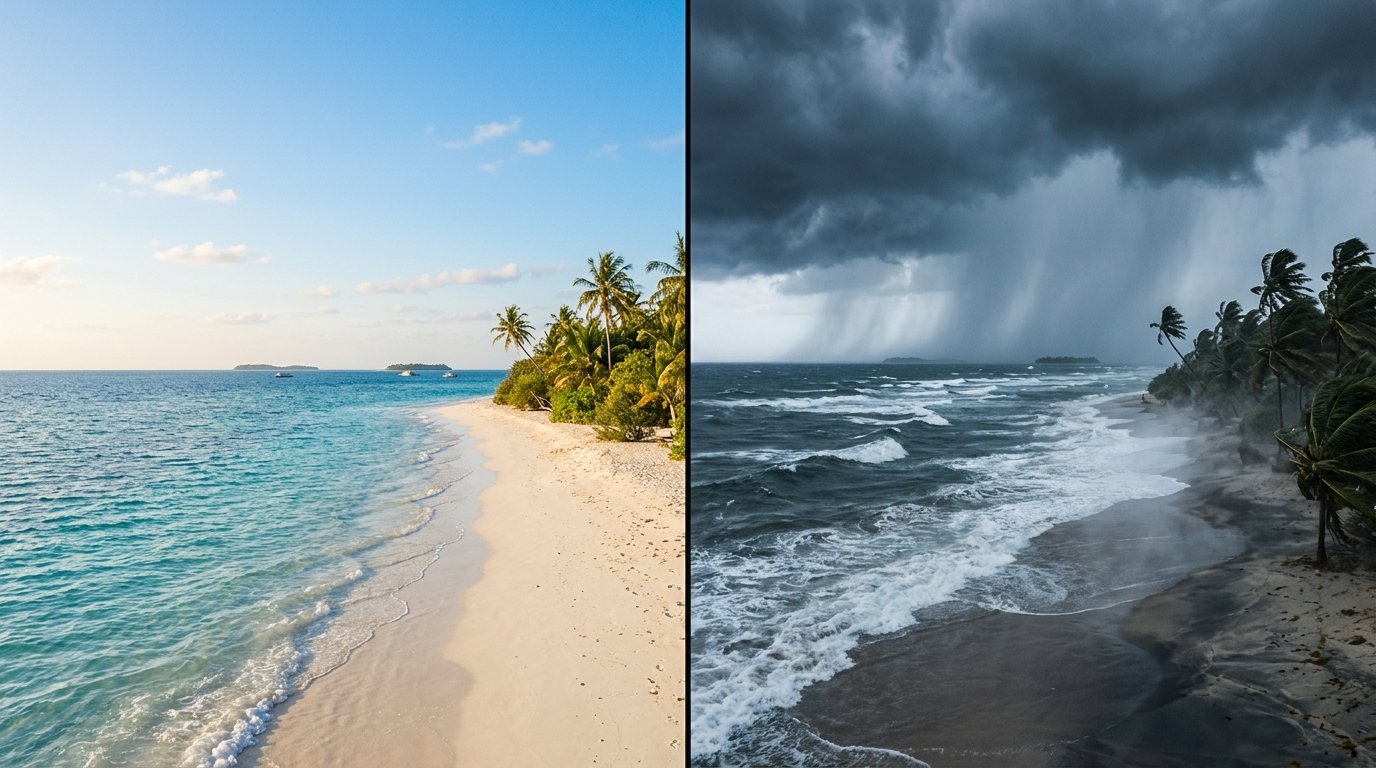
The rainy season is not the same throughout Thailand’s beach areas.
The period when it is generally drier extends from November to April.
The Gulf islands have a different seasonal pattern, with wetter conditions generally taking place later in the year, and the period from February to April as well as part of the northern summer can be useful for planning.
Consider these as general guidelines for planning rather than as assurances. If you are going to go ahead with a plan involving a lot of boats, make sure to check the current forecasts, any notices from the operators, and whether there are any seasonal park closures.
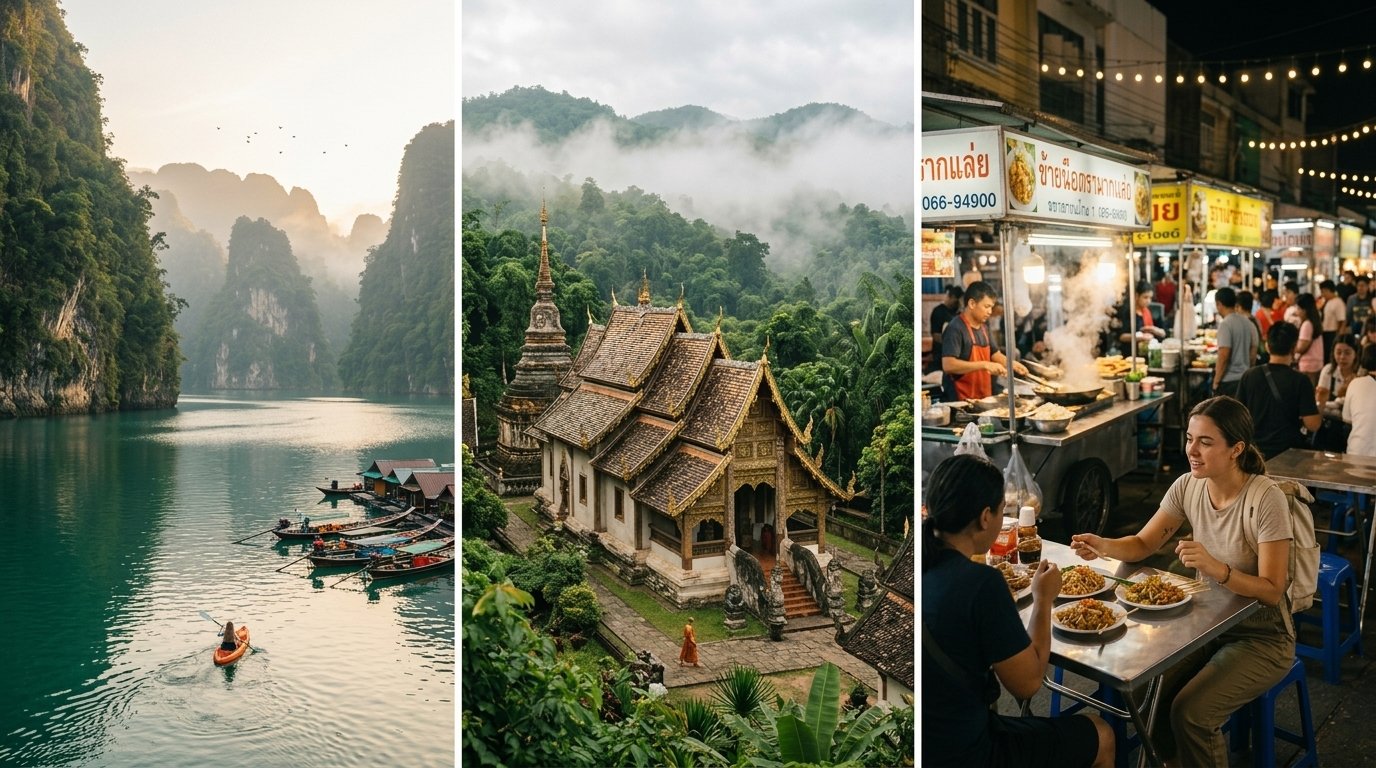
Bangkok can be the starting point for a combined journey; if one is most interested in culture and trips to the north then Chiang Mai should be chosen, or else a southern base should be selected if beach time is the main concern.
You can combine all three in two weeks and, if you want, choose two in one week.
If you are travelling on your own Bangkok and Chiang Mai are good places to go if you want a wide range of accommodation and the chance to take part in group activities; Koh Tao would be especially appropriate if your trip is based around a course.
The importance of your starting point is just as great as that of the destination; make sure you check whether meals, transport and the activities you would like to take part in are available, particularly if you don’t intend to drive.
Women traveling alone can read our guide to whether Thailand is safe for solo female travelers.
If you’d like a variety of beach areas, places to stay and activities, then go for Phuket.
Go for Krabi if the highlight for you is the limestone landscape at Railay and the boat trips.
If you’re going to stay, then do so. You will generally find that spending one day there is more beneficial than fitting both days into an already full schedule.
The optimal itinerary for Thailand includes time for actually enjoying the places you decide to visit. Begin with the experiences which you most desire—such as food, history, the forest or the sea—and allow yourselves sufficient time for them. A carefully paced trip will always be more rewarding than attempting to fit in every destination during a single visit.